Door Lock Installation in Redditch
Redditch's housing stock reflects its history as a planned new town, with 1960s and 1970s semi-detached and estate properties across Hunt End and Ipsley sitting alongside Victorian terraces in Bordesley. This mix means door lock installation across B97 and B98 calls for judgement: modern uPVC doors typically need a TS007-rated cylinder for insurance compliance, while older terraces often retain mortice fittings suited to a BS3621 mortice deadlock.
Available day or night
Emergency cover, 7 days
Skilled local engineers
DBS-checked and insured
No call-out charge
Price agreed before we attend
Why choose us
A locksmith Redditch can rely on
Quick local response
Engineers based around Redditch — a real arrival time confirmed when you call, not a call-centre estimate.
No call-out charge
You only pay for the work. The price is agreed on the phone before an engineer is sent.
Pay on completion
Settle up once the job is done and you are satisfied. Card payments accepted.
Insurance-standard work
BS3621 mortice deadlocks and TS007 anti-snap cylinders fitted to the standards insurers ask for.
How it works
Sorted in three straightforward steps
Call and describe the problem
Tell us what has happened and where you are. We give you a firm price and a realistic arrival time before anyone sets off.
A local engineer attends
A DBS-checked engineer arrives with the right tools and parts for your door lock installation job.
Job done, you pay on completion
The work is finished, tested and tidied. You pay once you are satisfied — card accepted, no call-out fee.
Guide prices
What common jobs cost in Redditch
| Job | Standard hours | Out of hours |
|---|---|---|
| Euro cylinder installation (uPVC/composite) | from £59 | from £99 |
| Anti-snap euro cylinder upgrade | from £59 | from £99 |
| BS3621 mortice deadlock install/replace (timber) | from £89 | from £149 |
| Mortice sashlock install/replace (timber) | from £104 | from £174 |
| Nightlatch (Yale-type) fitting (timber) | from £74 | from £124 |
| Multipoint gearbox installation (uPVC/composite) | from £104 | from £174 |
| Full multipoint lock strip installation | from £149 | from £249 |
| Smart lock installation (compatible door) | from £119 | from £199 |
| Emergency make-safe + lock replacement after damage | from £134 | from £224 |
| Additional keyed-alike euro cylinder (add-on) | +£30 | +£50 |
Guide prices for lock installation in Redditch. Standard hours 7am–6pm, out-of-hours 6pm–7am. No call-out fee; hardware charged separately.
Getting Door Security Right from the Start
Solid door security begins with the lock itself, and getting that choice right underpins everything else. A well-made lock forms the first barrier against anyone trying to force their way in, keeping your property protected around the clock. Locks come in various forms, each suited to different doors and different security demands. Wooden doors, for instance, tend to use a mortice sash lock, prized for its strength and dependability, while uPVC doors are commonly fitted with a euro profile cylinder lock thanks to how easily it installs and how consistently it performs. Timber doors also often pair a rim cylinder lock with a night latch, adding a further layer of protection. Even so, the best lock in the world won't help much if the frame around it is flimsy or badly fitted, which is why the frame deserves just as much attention as the lock when you're planning your door's security. Pair a solid frame with a dependable lock — mortice, rim cylinder or euro profile cylinder — and you'll notice a real difference in how secure your home feels and how much of a deterrent it presents to anyone with bad intentions. Choosing the right lock and having it properly fitted is what keeps the door doing its job and keeps your mind at ease.
Reasons You May Need a New Lock in Redditch
Moving house, changing tenants, or handing over keys — After moving in, there's no way of knowing how many keys are floating around or who still holds one. Swapping the locks is a sensible step when securing a new home, given you can never be fully certain who might still have access. It's a straightforward way to regain control over who can get in. In rental properties, it also keeps handovers between tenants clean and cuts down on 'mystery key' worries down the line. Even where you're sticking with the same door and hardware, replacing the cylinder or fitting a new mortice lock resets things to a known baseline, with fresh keys issued and the action checked both sides. As a general rule of thumb, locks are worth changing roughly every seven years to keep security up to standard.
Lost keys, lockouts, and locks that 'mostly' work — Losing a key can start out as a minor hassle and turn into a genuine security worry. Often, fitting a replacement cylinder (or a new mortice lock case) is the most sensible route, since it stops a lost key being used if it turns up in the wrong hands. Changing the lock in these cases is a straightforward way to make sure missing keys can't be used to get into your property later. Intermittent problems are just as common — a stiff lock, a key you have to wiggle, a handle that's gone loose. These often point to alignment trouble or a multipoint gearbox on the way out, and they rarely sort themselves out, sometimes leading to a door that refuses to lock altogether, usually at the least convenient moment.
Following an attempted break-in or visible damage — Once a cylinder's been attacked, the locking points along the door may still be out of alignment or under strain. Emergency fitting is about more than dropping in any available lock — it's about restoring proper security to the door and closing off the same weak spot again, upgrading vulnerable parts where it makes sense to cut the risk of a repeat attempt.
Understanding the Parts That Make Up a Door Lock
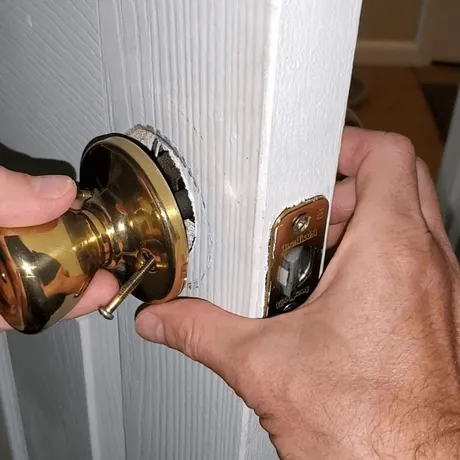
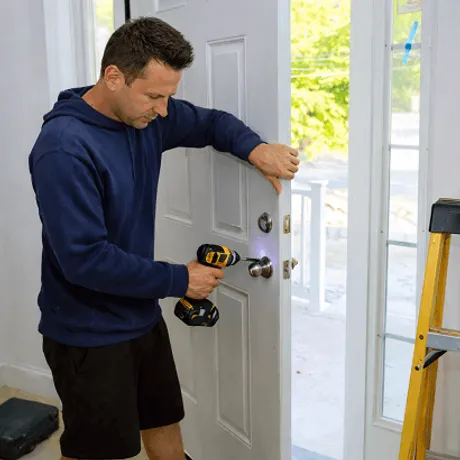
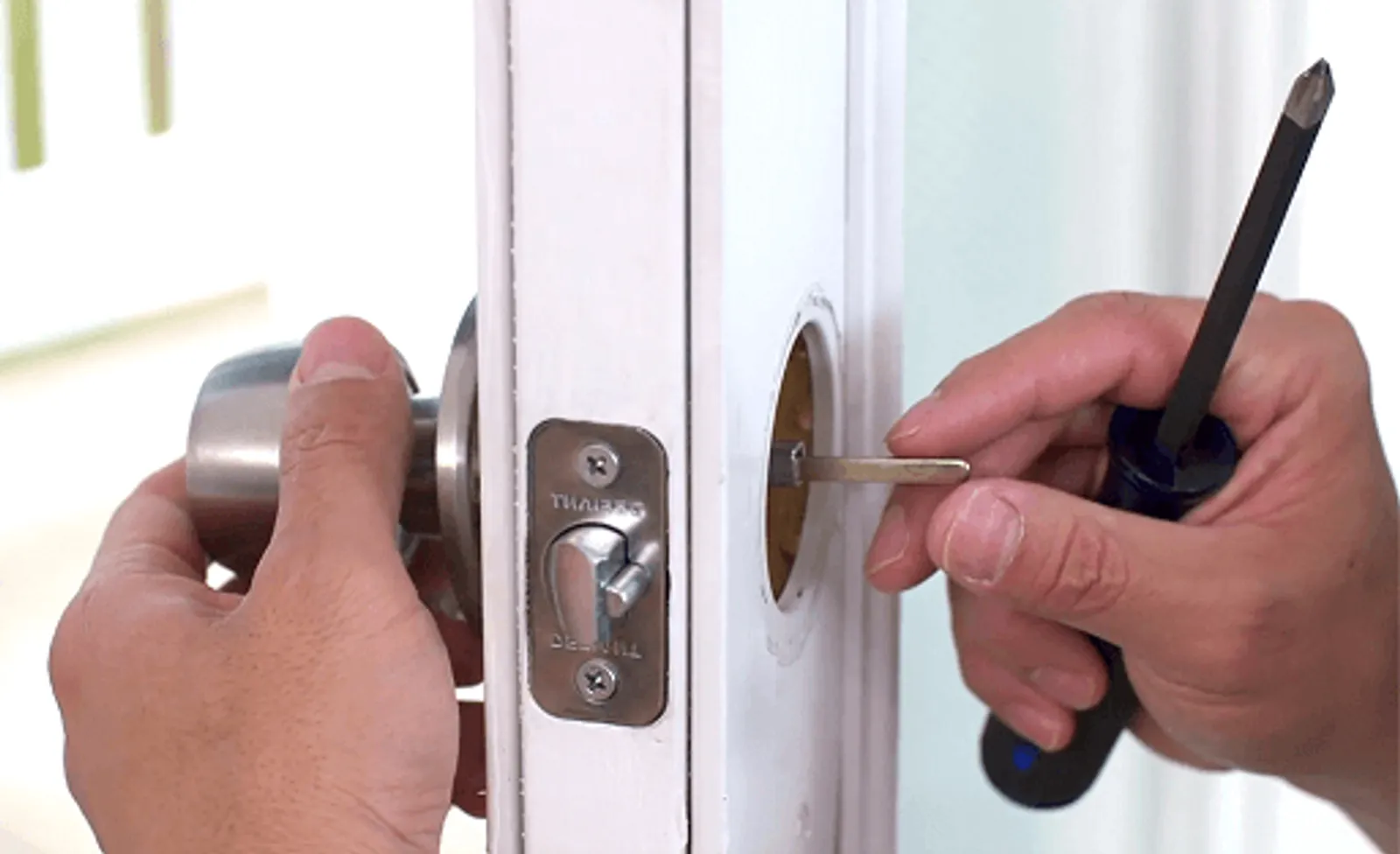
A working door lock depends on a handful of parts, each doing its own job to keep the door both secure and functional. At its centre is the lock body, holding the internal mechanism that drives the locking and unlocking motion. The cylinder is where the key goes in and turns, and it needs to be matched properly to the lock body so the key moves freely and the lock does its job reliably. The handle lets you open and close the door day to day, while the mounting plate fixes the lock onto the door itself, giving the mechanism something solid to sit on. On the frame side, the strike plate is positioned to catch the latch or bolt as the door swings shut, keeping it firmly closed. With mortice locks especially, careful measurement of the door's edge matters, so the lock fits properly and the strike plate lines up with the bolt as it should. Getting the installation right also means using suitable tools — a screwdriver, a drill, the screws that come with the lock — to leave a tidy, professional result. Every part needs to be aligned and fixed securely, both for security and for a lock that operates smoothly. Whichever job you're doing, fitting a new lock or swapping an old one, care taken over the lock body, cylinder and surrounding hardware is what keeps a door secure and working as it should.
What's Included in a Door Lock Installation
Fitting a new lock, replacing an old one, or upgrading security — Door lock installation can take a few different forms. It might mean putting in a lock where none existed before (this comes up often with internal-to-external door conversions, secondary locks, or extra security layers). It could be a like-for-like swap of an existing lock that's damaged, worn out, or no longer trustworthy. Whenever an old lock comes out, every part of it should be removed cleanly before the new one goes in. Or it might be a step up to something more secure — an anti-snap cylinder on a uPVC or composite door, say, or a British Standard mortice lock on a timber door. Which route makes sense depends on the door itself, what hardware's already fitted, and what you actually want from the lock — tougher security, smoother day-to-day use, meeting an insurer's requirements, or all of the above.
Rekeying and cylinder-only swaps — Quite often a full lock mechanism replacement isn't necessary. Where a euro cylinder is fitted, changing just the cylinder can be quicker and cheaper than replacing the whole lock strip, as long as the rest of the mechanism is in good shape and compatible. Swapping in a new cylinder can be manageable as a DIY job for someone with reasonable skills, though anything more involved is best left to a professional. On timber doors, rekeying is less usual than fitting a new mortice lock case, though it's still an option in certain cases. What decides it is the lock type and whether the existing parts can still be serviced.
Repair or replace: making the right call — Some problems genuinely can be fixed — small alignment tweaks, adjusting the keep, swapping a worn spindle or handle. But where a lock's binding because of internal wear, or a multipoint gearbox is failing, patching it up can end up costing more in the long run. A proper installation deals with what's actually causing the fault, not just the symptom on the surface — that's how you steer clear of repeat visits, sticking doors and locks that fail before their time.
Picking the correct lock for your door
Euro cylinders turn up on the majority of uPVC and composite doors across the UK, yet getting the size right trips up more people than you'd expect. Length is critical for both fit and security: a cylinder sticking out too far past the handle gives attackers something to grab onto, whereas one that's too short can leave the mechanism sticking or unreliable.
Getting the cylinder selection right means working out internal and external measurements so it beds in correctly within the handle set, checking the cam position and how it operates, deciding between thumbturn and key/key depending on how the door is used and any escape needs, and matching security features such as anti-snap, anti-drill, anti-pick and anti-bump to the actual risk involved.
On timber doors, a mortice deadlock (bolt only) or a sashlock (which combines latch and bolt) tends to be the go-to option. Sashlocks are popular on wooden doors precisely because they offer both convenience and added security in one unit. Where insurers are involved, a BS3621 mortice lock is often the preferred route for external timber doors since it's a widely recognised standard. These locks sit within the door itself and remain a strong choice for timber security.
Wooden doors, whether internal or external, can also take door bolts for an added layer of protection. What really counts, though, isn't just the lock case itself — it's how precisely the door has been cut, how well the edge has been prepared, and whether the keeps line up so the bolt throws fully without needing to be forced. Getting the door edge measurements right, including the slot and backset, is what allows a mortice lock to sit properly and actually deliver the security it's rated for.
Night latches, sometimes called rim locks, work well as a second layer on timber doors when there's already a solid mortice lock fitted. You'll often hear these called Yale locks, and they're a familiar sight on front and back doors. The rim cylinder that comes with them typically mounts on the face of the door and forms the core of how the night latch operates. As with any lock, fitting quality is everything — the latch needs to sit correctly, be fixed securely, and engage smoothly rather than needing a slam to catch.
A secondary lock should work alongside the main lock, not fight against it. If it makes locking up awkward, people simply stop bothering — which defeats the purpose entirely.
Fitting uPVC multipoint locks in Redditch
A uPVC multipoint system doesn't rely on a single lock — it engages at several points along the door edge. So when something goes wrong, it can feel like the whole lock has failed, but the actual culprit is usually one of: a gearbox on its way out, the door dropping or shifting out of alignment, worn keeps, rollers or hooks, or a handle fault interfering with the lift-to-lock action.
This is precisely why fitting a multipoint lock takes more than swapping parts. The mechanism needs to move smoothly, and the door itself has to sit properly in its frame so locking doesn't require brute force.
Sometimes swapping out just the gearbox does the job and keeps the bill reasonable. Other times, wear has spread through the whole strip — or the right parts simply aren't available anymore — meaning a full multipoint replacement is the smarter long-term call.
Whichever route is taken, the goal stays the same: a door that lifts, locks and unlocks without a fight, with the latch and deadbolt working reliably every time.
Once fitted, the lock needs proper testing — locking and unlocking from both sides, checking the handle moves smoothly and the bolts or hooks throw fully, and confirming everything engages into the keeps correctly without the door needing to be lifted or forced. Where necessary, keeps and strike plates get adjusted so you don't have to trade off usability for security.
Composite and aluminium doors: getting the right fit without cutting corners
Composite doors typically run multipoint systems that look similar to uPVC ones, but the tolerances and hardware combinations often differ. Aluminium doors bring their own variations in profile and fittings, particularly in commercial installations.
A clean fit comes down to properly identifying and measuring the door before any work starts, so the new lock hardware sits correctly and works reliably from day one.
These doors are built to perform and to look the part, so a good installation avoids unnecessary drilling, keeps hardware properly aligned, and preserves the door's finish wherever it can.
If a previous lock has failed or shows signs of a break-in attempt, the job might also involve making good the surrounding area — the aim being a result that's secure and tidy, not just patched over and still vulnerable.
Security upgrades worth having
Where euro cylinders are fitted, switching to an anti-snap version is one of the most worthwhile changes you can make, since snapping remains a go-to method for attackers where cylinders sit exposed or proud of the handle. Better cylinders often bundle several protective features into one unit.
A deadbolt is another straightforward way to add real security, particularly on wooden doors.
Depending on the door and how it's used, sensible upgrades might include anti-snap cylinders (often carrying TS007-style ratings), anti-drill and anti-pick protection, and better key control where it's needed.
None of this should come at the cost of practicality. A lock that's a hassle to use tends to get used badly — or not at all — which undoes the whole point of upgrading.
Sometimes the cylinder itself is fine and the real weakness lies in the hardware around it. Better handle sets or reinforced escutcheons can cut down cylinder exposure and make manipulation harder.
Cylinder guards have their place too, particularly on doors where the design leaves the cylinder more exposed than it should be.
On some outward-opening doors, the hinge side needs attention as well — hinge bolts or guards aren't always necessary, but where they are, they close off a gap that lock upgrades alone won't fix.
Standards and insurance-approved locks in Redditch
What does a BS3621 mortice lock actually mean for my timber door
If someone's told you that you need a British Standard lock, they usually mean BS3621 on an external timber door. In real terms, that's a lock meeting a recognised benchmark, fitted properly so the bolt engages fully and consistently every time. The rating on the box only matters if the installation backs it up.
What's the deal with BS8621 and keyless escape
Certain properties benefit from being able to get out without needing a key — useful if a key goes missing during an emergency. BS8621 comes up in this context because it covers keyless egress. Keyless entry has also become popular for front doors more generally, especially alongside smart lock systems. If escape suitability matters for your situation, choose based on how the door is actually used day to day, not just the security specs.
Where do Secured by Design and PAS 24 fit in
You'll sometimes see Secured by Design or PAS 24 mentioned when comparing doors and locks. These usually form part of a wider security conversation covering doorsets, frames, glazing, hardware and installation together. For the lock itself, what matters most is compatibility — choosing hardware that supports the door's intended security rather than working against it.
Smart lock fitting in Redditch
Smart locks suit households and businesses that want flexible control over who can get in — whether that's family members, guests, staff, or short-term tenants — provided the door itself closes properly and the hardware is suited to it.
Our fitting service concentrates on getting the installation right, with an emphasis on precise fitting and dependable day-to-day performance.
The best results come from doors that already sit well in their frames and use modern fittings. Fitting a smart lock onto a door that sticks or drops will only carry those faults forward.
A sound smart lock setup accounts for a few practical questions in advance, including how batteries get changed, what override method exists so you are not solely dependent on an app, how the lock behaves if power is lost, and how user access is granted or removed.
The aim throughout is added convenience without creating fresh points of failure.
Once fitted, every smart lock installation should finish with a full handover — access methods checked, codes and app permissions set up, and the mechanism run through its paces several times to confirm it closes smoothly and locks reliably.
Emergency lock repairs and making your door secure again
Callouts following a break-in or lock failure rarely involve just a single component. Handles can be damaged, keeps bent out of shape, or the door itself knocked out of alignment by forced entry. The first job is always getting the property secure again safely, followed by working out whether a straight swap will do or whether it's worth upgrading.
In some cases a temporary fix makes more sense — for instance while the correct parts are being sourced. Wherever it's possible, though, sorting full security on the same visit is preferable to leaving a door only partly protected.
We'll always talk you through the available options so you can weigh up speed, cost, and how much security you want going forward.
Our process for fitting a door lock
Every visit starts with checking what type of door you have, what hardware is already fitted, and what's actually causing the problem. Accurate measurements are taken before any parts are ordered, which matters most with euro cylinders and multipoint setups where sizing and centres need to be exact.
Getting these details right is what separates a lock that merely fits from one that keeps performing properly for years afterwards.
Fitting involves careful, secure work with proper fixings, plus whatever adjustment is needed so the door locks without being forced. Where the door itself needs realigning, or the keeps need adjusting, that gets sorted as part of the job.
If older hardware has left marks or damage behind, we can talk through options for making good, so you're left with something both secure and presentable.
A proper finish always includes repeated testing of the lock from both sides, checking the latch and bolt engage smoothly, confirming the key turns cleanly (with spare keys discussed if needed), and providing a receipt or job note for your records, landlord, or insurer.
We make sure both key and lock operate smoothly before we leave.
What affects the cost of fitting a door lock
Prices differ considerably depending on what you actually need — a straightforward replacement cylinder is a different job to a high-security anti-snap version, a standard mortice case is priced differently to a British Standard-rated one, and a full multipoint strip costs more than swapping out just the gearbox. Security grade and brand also play a part in the final figure.
A simple cylinder change on a door that's hanging correctly is generally more straightforward than replacing a multipoint mechanism on a door that's dropped. Composite, aluminium, and older timber doors can add complexity too, depending on what hardware is already there and its condition.
Where a door has been damaged — through an attempted break-in, split timber, or bent keeps — getting it properly secure again may need extra parts and time.
Same-day callouts, evening work, and weekend visits all affect the final price, and optional extras such as upgraded handles, cylinder guards, spare keys, or additional security measures can be added where they make sense.
A transparent breakdown means you can decide what needs sorting immediately and what can wait.
Service option | Average on-site time | Standard hours (7am–6pm) starting from | Out-of-hours (6pm–7am) starting from | Notes
Euro cylinder installation (uPVC/composite) | 1 hr | £59 | £99 | Measure, fit and test; cylinder cost extra.
Anti-snap euro cylinder upgrade | 1 hr | £59 | £99 | Upgrade fit and testing; high-security cylinder extra.
BS 3621 mortice deadlock install/replace (timber door) | 1 hr 30 mins | £89 | £149 | Neat fitting and alignment; lock/keeps extra if needed.
Mortice sashlock install/replace (timber door) | 1 hr 45 mins | £104 | £174 | Latch + deadbolt set-up; lock and furniture extra.
Night latch (Yale-type) fitting (timber door) | 1 hr 15 mins | £74 | £124 | Secondary lock positioning and clean fixing; parts extra.
Multipoint gearbox installation (uPVC/composite) | 1 hr 45 mins | £104 | £174 | Diagnose, fit and re-test engagement; gearbox/handles extra.
Full multipoint lock strip installation (uPVC/composite) | 2 hrs 30 mins | £149 | £249 | Includes set-up and post-fit checks; strip/keeps extra.
Smart lock installation (compatible door) | 2 hrs | £119 | £199 | Fit, set-up and handover; smart lock supplied separately.
Emergency make-safe + lock replacement/installation after break-in/damage | 2 hrs 15 mins | £134 | £224 | Restore security and function; parts/making-good may be extra.
Additional keyed-alike euro cylinder fitted (each extra, same visit) | 30 mins | +£30 | +£50 | Add-on only; assumes main job already underway; cylinder extra.
Guarantees, ongoing care, and lasting performance
Fitting a new lock shouldn't leave you wondering whether it'll hold up. Clear terms covering both parts and workmanship take the guesswork out of future maintenance or upgrades.
Most lock problems start with a misaligned door or a mechanism being forced rather than adjusted properly. If a lock starts feeling tight or stiff, it's worth getting it looked at before you end up forcing the key and risking a snap or internal damage.
Steer clear of heavy-duty lubricants, as they tend to attract grime over time. If you're not sure what's suitable for your particular lock, a quick check beforehand avoids doing accidental harm.
After a proper installation, you should notice the lock closes smoothly without lifting or slamming, the latch and bolt engage consistently every time, the key turns without resistance, and handles spring back properly where fitted.
If any of that isn't happening, it's usually down to something needing adjustment — and catching it early protects both the lock and the door long-term.
Common questions on fitting door locks in Redditch
How much time does fitting a lock actually take?
Swapping a euro cylinder on a door that's already working well is usually a fast job, though it still needs proper measuring and thorough testing afterwards to be done right. Jobs involving a multipoint lock or a gearbox swap take longer, since the engagement points and alignment all need to be checked carefully. Where a door has dropped or the keeps are out of position, it's worth allowing extra time to sort that out first, otherwise the same fault tends to come back.
Are British Standard locks such as BS 3621 something you fit?
Yes, provided the door type allows for it. BS 3621 mainly applies to mortice locks on external timber doors. What matters most isn't just choosing the correct lock, but making sure it's fitted and aligned properly so it actually works as designed. With uPVC or composite doors, insurers tend to look more closely at the overall standard of the locking mechanism and cylinder rather than one specific certification.
Should the whole multipoint lock be replaced, or just the gearbox?
That depends on what's actually gone wrong and what parts can be sourced. Sometimes a new cylinder or lock unit is enough to get things working again, particularly if the fault is isolated to one component. If it's only the gearbox that's failed, replacing that alone can be the sensible choice. But where the whole strip has worn down, or the mechanism has been altered or doesn't match properly, a complete replacement tends to hold up better over time. A proper diagnosis should explain why a particular route is being recommended, not just push you towards the priciest fix.
Is it possible to have one key working for every external door?
In most cases, yes, using keyed-alike cylinders where the hardware allows for it. It's a popular upgrade for households juggling several external doors. Where full compatibility isn't achievable, we can still cut down the number of keys needed by grouping the doors that can be matched together.
Will a smart lock fit on any door I have?
Not always. Smart locks perform best on doors that shut cleanly every time and have hardware that suits them. Fit one to a door that sticks, drops, or doesn't sit square, and those same problems will carry over to the smart lock, making it less dependable. A sensible installation also factors in a backup key option and a plan for battery changes.
What's different about fire doors or shared doors in flats?
Fire doors and communal entrances often come with extra rules around certified fittings and making sure escape routes stay clear. Lock decisions here need care, and fitting work shouldn't interfere with how the door is meant to perform. Internal doors are a different matter, usually needing locks suited to privacy or appearance rather than high-level security. If you manage a building with shared access, it's best to treat this as a compliance matter rather than a routine domestic lock change.
Do tenants need landlord sign-off before changing locks?
Most tenancy agreements permit lock changes, though the landlord may need a copy of the new key or to give approval first, depending on the contract. In rented properties, it helps to keep clear paperwork showing exactly what work was carried out and when. For HMOs or smaller commercial premises, there can also be access rules and authorisation steps worth checking beforehand.
Door Lock Installation — common questions in Redditch
What lock do I need to satisfy my home insurance policy in Redditch?
Most insurers require a BS3621 mortice deadlock fitted alongside your existing cylinder, particularly on timber doors in the older Bordesley terraces. For uPVC doors common across Enfield and Crabbs Cross, insurance compliance is usually met through a TS007 3-star rated cylinder rather than a mortice lock. We check your policy wording and fit accordingly rather than assuming one standard covers every door type.
My uPVC door has a Euro cylinder that turns loose. Should I replace the whole mechanism or just the cylinder?
A loose or worn cylinder can often be replaced on its own, and upgrading to a TS007 3-star cylinder addresses snapping vulnerabilities without touching the multipoint mechanism behind it. If the gearbox itself is failing, which is common on 1960s and 1970s estate properties in Hunt End and Ipsley after decades of use, the full mechanism needs replacing. We inspect the door before quoting so you are not paying for parts that do not need changing.
I have an original Victorian front door in Bordesley. What kind of lock installation is appropriate?
Period timber doors typically call for a mortice lock fitted to BS3621 standard, often paired with a night latch for everyday use and a sash lock arrangement if the door retains its original rim furniture. Listed-building restrictions can limit what alterations are permitted to the door itself, so we assess the property before recommending fittings. This keeps the door's character intact while still meeting recognised security standards.
Areas we cover around Redditch
Our main response area is Redditch and its immediate neighbourhoods. We also cover the surrounding towns and villages below — call to confirm cover and arrival time for your postcode.
- Rowney Green
- Dagtail End
- Greenlands
- Hunt End
- Enfield
- Lakeside
- Crabbs Cross
- Church Hill North
Postcode districts covered: B97 · B98