Safe Installation in Redditch
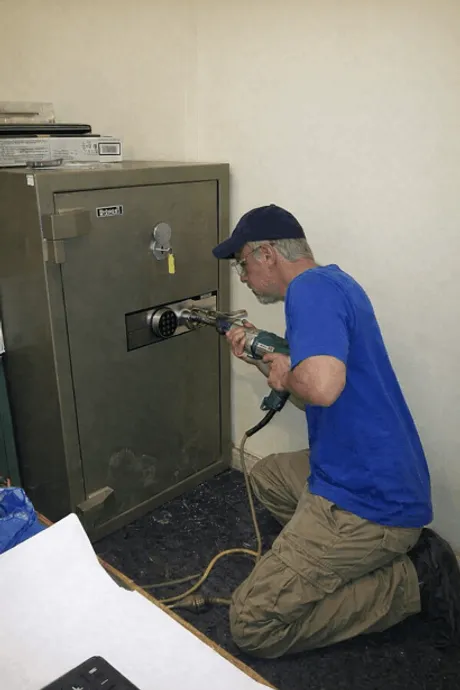
Redditch's mix of 1960s Hunt End and Ipsley estate semis and the newer Lakeside flat developments each present different fixing challenges when it comes to secure anchoring, whether into a masonry cavity wall or a modern concrete floor. We assess joist and wall construction on site before recommending a floor-mounted safe or wall safe, matched to an appropriate cash rating and fire rating for what you intend to store.
Available day or night
Emergency cover, 7 days
Skilled local engineers
DBS-checked and insured
No call-out charge
Price agreed before we attend
Why choose us
A locksmith Redditch can rely on
Quick local response
Engineers based around Redditch — a real arrival time confirmed when you call, not a call-centre estimate.
No call-out charge
You only pay for the work. The price is agreed on the phone before an engineer is sent.
Pay on completion
Settle up once the job is done and you are satisfied. Card payments accepted.
Insurance-standard work
BS3621 mortice deadlocks and TS007 anti-snap cylinders fitted to the standards insurers ask for.
How it works
Sorted in three straightforward steps
Call and describe the problem
Tell us what has happened and where you are. We give you a firm price and a realistic arrival time before anyone sets off.
A local engineer attends
A DBS-checked engineer arrives with the right tools and parts for your safe installation job.
Job done, you pay on completion
The work is finished, tested and tidied. You pay once you are satisfied — card accepted, no call-out fee.
Guide prices
What common jobs cost in Redditch
| Job | Standard hours | Out of hours |
|---|---|---|
| Pre-install survey and feasibility check | from £59 | from £99 |
| Freestanding safe installation (typical) | from £89 | from £149 |
| Heavy/awkward freestanding install (stairs/tight access) | from £134 | from £224 |
| Wall safe installation | from £179 | from £299 |
| Floor / underfloor safe installation | from £269 | from £449 |
| Remove & reposition within the same property | from £119 | from £199 |
| Remove & re-install at a new address | from £209 | from £349 |
| Evidence pack / installation documentation (add-on) | +£15 | +£25 |
| Minor making good / cosmetic finishing (add-on) | +£30 | +£50 |
Guide prices for safe installation in Redditch. Standard hours 7am–6pm, out-of-hours 6pm–7am. No call-out fee; you supply the safe, fixings charged separately.
What a Safe Installation Job Actually Covers
Fitting a safe properly means working through a series of connected stages, and if any one of them is skipped or rushed, the whole job suffers for it. For anything out of the ordinary, it's worth raising special requirements and sorting any approvals before work begins, so the installation can go ahead without hitches.
Before any drilling starts, a proper survey should establish the safe's type and intended use — jewellery, documents, cash, watches, keys, controlled items, and so on — along with the property's constraints, such as wall construction, floor type, access routes, stair turns and door widths, plus the ideal placement for concealment, usability and resistance to attack, and a clear anchoring plan covering fixing type, fixing points and anti-leverage positioning.
This groundwork is what prevents the classic mistakes: fixing a safe into timber studs, crumbly masonry, dot-and-dab plasterboard, or weak blockwork using anchors that were never designed for the job. Getting professional input at this survey stage means every factor is properly weighed up, both for security and for meeting insurance requirements.
Where the safe ends up is part of the security itself. A sound location steers clear of the obvious first-look spots, limits the room available for bars or tools to gain leverage, and strikes a balance between everyday convenience and genuine protection, all while accounting for door swing, nearby shelving, and ease of access.
For a lot of homes in Redditch, the best result is a discreet spot that still allows for solid anchoring into reliable masonry or concrete, rather than a spot that's handy but simply can't take a proper fixing.
Safe Grades, Cash Ratings, and Meeting Insurer Expectations
Most people looking into safe installation want reassurance on two fronts: that the safe will actually protect what's inside, and that it satisfies their insurance policy. That confidence starts with picking the right grade of safe for both security and cover purposes.
Safes and secure cabinets are generally sold against recognised standards. Put simply, higher-rated safes are built and tested to resist attack for longer and against tougher tools, while lower-rated cabinets still have their place, provided they're matched to a sensible level of risk.
If you already own a safe, we'll check what you've got and whether it's actually fit for what you're storing. If you're buying new, we can steer you towards a rating that fits your circumstances, rather than paying over the odds for spec you don't need, or under-specifying and taking on unnecessary risk.
Terms like cash rating and overnight cash rating are often used as a rough guide to how much cover an insurer might offer, though policies vary. What matters is that everything lines up: the safe's rating suits what you're protecting, the installation and anchoring meet what the insurer expects, and the paperwork is thorough enough to back up a claim if you ever need one.
A properly fitted safe can sometimes bring your insurance premium down, since insurers may factor in the extra security when calculating your policy.
Tell us what you're insuring and share any insurer wording you've been given, and we can help work out what it means in practice for an installation in Redditch.
Anchoring: The Detail That Stops a Safe Being Carried Off
When safe installations fail in the real world, it's almost always down to weak anchoring, or anchoring into the wrong material. Being bolted down means little on its own — what counts is the type of bolt used and whether the fixings suit the substrate they're going into.
Homes and premises across Redditch vary enormously in construction — solid brick or block, solid concrete or load-bearing masonry, concrete floors and slabs, suspended timber floors, modern stud walls with plasterboard, or older plaster and variable masonry in renovated extensions. We assess what we're fixing into and choose an anchoring method to suit, aiming for anti-removal so the safe can't simply be carried away, while also cutting down the room available for leverage attacks.
Many safes arrive with basic fixings included, but these aren't always right for every wall or floor. Depending on the substrate and the safe itself, we might use heavy-duty masonry anchors, standard fixing bolts, through-bolting where it's suitable, chemical anchors in appropriate masonry, or fixing patterns designed to maximise resistance and cut down leverage points. It's important to always follow the manufacturer's fitting guidance to keep things safe, compliant, and acceptable to insurers.
Fitting over underfloor heating calls for extra care to avoid damaging the pipework beneath — a concrete plinth or chemical fixings are often the safer route, and it's worth getting a professional's view before proceeding. The right fixings, torqued and installed correctly, make a real, measurable difference to how secure the safe actually is.
Even a well-anchored safe becomes easier to attack if there's space around it to work with. Positioning decisions often involve fitting the safe snugly into cupboards or joinery without making it awkward to use, limiting the room tools have to grip around the door edges, avoiding free-standing gaps that invite levering, and for larger safes, anchoring into concrete or timber floors through a dedicated hole for maximum stability.
Safe Installation Types We Handle Across Redditch
Different safes call for different fitting decisions, and choosing the right type in the first place depends on your property's structure and what level of security you actually need.
Freestanding safes are the most common choice for homes and small businesses alike. The main focus is correct anchoring into the floor, the wall, or both, careful anti-leverage positioning, and planning the access route, particularly for heavier models. For larger units, it's worth bringing in professionals to handle the installation, given the weight involved and the security demands.
Wall safes are popular for their concealment, but fitting them properly means being realistic about wall depth and construction, reinforcing the fixing adequately, and finishing the job discreetly while still allowing for future access. They're also a common choice in office environments where hidden, secure storage is needed.
Floor and underfloor safes are more specialised and depend heavily on the property itself. A floor safe sits embedded within the floor structure, which makes it far harder to remove or tamper with, and these are often put in during a build or renovation, giving the added benefit of concealment alongside theft protection. Key considerations include whether the concrete and structure can take it, protection against moisture and long-term corrosion, and keeping the safe accessible and concealed without making it impractical to use.
If you're not sure which option makes sense for your property in Redditch, the survey stage is exactly where we head off costly mismatches before they happen.
Choosing a lock, setting it up, and handing it over safely
A lock isn't simply the mechanism that opens the door, it's a core part of the whole security package. Safes exist largely to keep cash away from thieves and damage, while also protecting jewellery, documents and other valuables you'd rather not lose.
There are three common routes: key locks, mechanical combination dials, and electronic locks, and each comes with its own compromises.
Key locks are straightforward and dependable, though they demand proper key control to stay secure.
Mechanical combination locks need no batteries and hold up well, but only work if you use them precisely every time.
Electronic locks offer speed and convenience, provided you stick to sound code habits and keep on top of battery changes.
Certain safes also include fire resistance built into their construction and rating, giving your valuables an extra layer of protection if the worst happens.
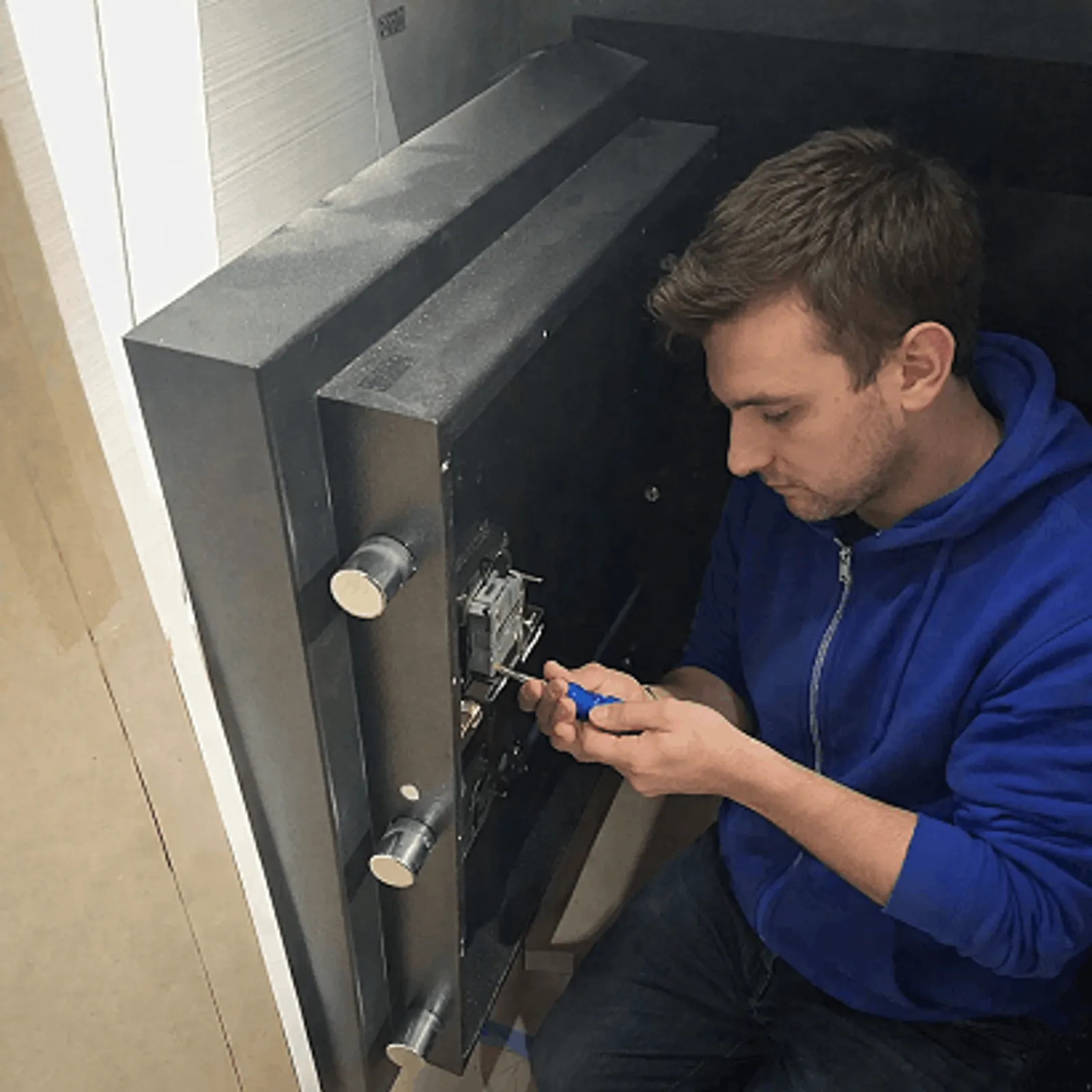
We make sure the lock is fitted and configured correctly, test that it runs smoothly, and talk you through using it safely on a daily basis.
Changing codes and controlling keys properly
Most break-ins and lockouts trace back to a handful of avoidable habits: sticking with factory-set or easy-to-guess codes, handing codes out too freely, or leaving spare keys somewhere obvious near the safe.
A proper handover covers how to pick and update codes securely, who should actually have access, sensible ways to store backup keys or codes, and, where electronic locks are involved, a routine for replacing batteries before they fail.
Keeping the fitting low-key and thinking through access
Fitting a safe without care can undo its security before it's even switched on. We build discretion into every stage, treating quiet, unremarkable delivery as a core part of the job rather than an afterthought.
Being discreet where it counts
Depending on what you need, this might mean keeping the safe out of sight during the visit, not discussing details of the install with others, handling packaging and offcuts sensibly, and avoiding photos that might give away where the safe sits.
Access issues that shape the job
How easy the property is to work with often decides both what's possible and what it costs: stairs, narrow hallways and tight doorways, how far the safe has to be carried from the parking spot, whether there's room to manoeuvre and protect flooring, how heavy the unit is, and whether a lift or lifting gear is needed for a heavy safe, particularly in a building with several floors.
Thinking through these details beforehand keeps the job free of last-minute hitches and means the install goes smoothly.
Proof and paperwork for your safe installation
When you want the work done right and want to be able to show it, proper records matter. Written proof of a professional fitting is genuinely useful, both as a reference later and as backing for any insurance claim.
What goes into a record of the work
For clients who need it, particularly where insurance is involved, we can put together details of the safe's make, model and security rating (where these are known), a summary of how it was anchored, photographs of the finished job (kept confidential and only passed on if you ask for them), and notes describing the fixing point, such as anchored into solid masonry or bolted to a concrete floor.
This isn't box-ticking, it's a practical record that gives you peace of mind and something concrete to point to if you ever need to prove what's in place.
Moving, relocating and refitting a safe you already own
If you've got an existing safe that needs shifting, whether it's staying within the same building or heading to a new property in Redditch, the priority throughout is keeping it secure at every stage. Our team handles the whole process of taking it out, moving it and fitting it again, making sure nothing about the job compromises security along the way.
This covers de-bolting the safe without damaging it or the surrounding structure, moving it with suitable equipment, assessing the new spot and planning fresh anchoring, and checking everything operates correctly and sits properly once it's refitted.
A relocation is often a good opportunity to upgrade an older fitting too, for instance improving the substrate it's anchored into or switching to a better fixing method.
What drives safe installation costs in Redditch
Safe installation pricing shifts depending on what's being fitted and what it's being anchored into, since that combination determines the actual security you end up with. A fair quote reflects the safe's resistance rating, the anchoring approach, and any access or finishing work required, rather than a flat, generic figure.
The key factors behind the price
Safe grade and rating: higher-security safes, Eurograde models for example, tend to be heavier and trickier to position and anchor, which can mean more time on site. Where you need to satisfy an insurer, the safe's rating and cash cover expectations may also shape how we approach the fitting.
Safe weight and size: heavier units can call for specialist lifting gear, extra hands, and more time to move safely, especially where stairs, tight corners or restricted space are involved.
Route and access into the property: the practical path to the fitting spot is often a bigger factor than clients expect. Narrow doorways, steps, a long carry from the parking area, lift restrictions or multiple staircases all add complexity.
Substrate and fixing needs: the make-up of the wall or floor matters a great deal. Anchoring into solid masonry or concrete differs from working with blockwork, suspended timber floors, or modern plasterboard and stud partitions. Some jobs need heavier fixings, different anchor points, or a rethink on placement to get the same resistance to removal.
Finishing and making good: some installs are purely functional, just secure anchoring with minimal disruption, while others need tidier results, such as small patch repairs, cover plates, cupboard adjustments, or discreet finishing touches around the unit. The more invisible you want the end result, the more time and materials it typically takes.
What a proper quote should spell out
A clear quote should confirm the type of safe (freestanding, wall or floor) and where it's going, the anchoring method and whether heavy-duty fixings are included, any assumptions about access such as stairs, parking distance or tight spaces, whether finishing or making good is part of the price, and any extras like removing or relocating an old safe, or additional discretion during the job.
What It Costs to Have a Safe Fitted in Redditch
Below is a breakdown of typical costs for Redditch depending on the type of safe and the work involved. Prices shown are starting figures, as actual costs depend on access, wall or floor construction, and how much preparation is needed on the day.
Pre-install survey and feasibility check (placement plus anchoring plan) — around 1 hour on site. Standard hours (7am–6pm) from £59, out-of-hours (6pm–7am) from £99. This confirms the substrate, access route and how the safe will be fixed, without any drilling involved.
Freestanding safe installation for typical homes or small businesses — around 1 hour 30 minutes. Standard hours from £89, out-of-hours from £149. Covers secure anchoring and positioning to resist leverage attacks; you supply the safe, and fixings or materials are charged separately if needed.
Heavy or awkward freestanding safe installation, including stairs or tight access — around 2 hours 15 minutes. Standard hours from £134, out-of-hours from £224. Involves careful manoeuvring and secure repositioning, sometimes with extra handling equipment or precautions.
Wall safe installation, set into the wall with a secure fixing and neat finish — around 3 hours. Standard hours from £179, out-of-hours from £299. Time and cost depend on wall depth and construction; reinforcement or making good afterwards may add to both.
Floor or underfloor safe installation, a specialist job that depends heavily on the property — around 4 hours 30 minutes. Standard hours from £269, out-of-hours from £449. Requires a structural feasibility check first, with moisture protection and finishing potentially charged extra.
Removing and repositioning a safe within the same property (re-anchoring) — around 2 hours. Standard hours from £119, out-of-hours from £199. Includes taking the safe off its existing fixings, moving it, re-anchoring it, and checking it operates properly.
Removing a safe and re-installing it at a new address, a two-site job — around 3 hours 30 minutes. Standard hours from £209, out-of-hours from £349. Covers secure removal and re-anchoring at the new location; access and weight have a big impact on how long this takes.
Evidence pack or installation documentation, available as an add-on — around 15 minutes. Standard hours from an extra £15, out-of-hours from an extra £25. Provides a summary of the anchoring work plus photos on request, shared with you privately.
Minor making good or cosmetic finishing, available as an add-on — around 30 minutes. Standard hours from an extra £30, out-of-hours from an extra £50. Covers small patching or covering work around fixings or recesses, with materials charged extra where required.
Installation Errors That Undermine Security (and How to Sidestep Them)
When weighing up different installers, watch for these signs that often point to a poor result:
Fitting a safe without first checking exactly what it's being anchored into.
Relying on standard fixings regardless of whether the wall or floor is timber, masonry or something else entirely.
Bolting into plasterboard or timber without a fixing plan strong enough to hold.
Leaving noticeable gaps around the safe that make it easier to lever open.
Skipping the step of changing default electronic lock codes, or never raising the subject of key control.
Treating discretion and concealment as an afterthought rather than part of the plan.
A poorly fitted safe leaves your valuables exposed, since weak anchoring or obvious placement makes life far easier for anyone looking to break in.
A safe represents a long-term investment in security, and the standard of fitting needs to match that.
Safe Fitting Questions Answered for Redditch
Does every safe need bolting down
Most do, particularly lighter ones, since the point is to stop someone simply carrying it off or prising it open. Safe weighing rules and insurer requirements generally mean anything under 1000 kg needs to be anchored to meet proper security standards. The precise requirement varies with the safe's weight, its design, and what your insurer expects.
Can a safe be fitted in a flat or leasehold home
Usually, yes, though it comes down to lease permissions and restrictions on what you can drill into. Ground floor properties tend to be simpler because access and anchoring options are more straightforward. We'll talk through what's realistically achievable when we survey the property.
Is a wall safe automatically the better choice since it's out of sight
Not necessarily. Being hidden helps, but the strength of the wall and the quality of the fixing matter just as much. A badly fitted wall safe can actually be more vulnerable than a well-anchored freestanding one. Getting a qualified locksmith to handle wall safe fitting makes a real difference to both security and compliance, since they know how to get the anchoring right.
What happens if I lose the key or forget the code
We'll go through backup access and planning with you at handover, which cuts down the chance of getting locked out later on. Should you lose your keys or codes down the line, we can arrange replacements where needed. If you're already locked out, that's treated as a separate call-out for safe entry rather than part of installation.
Local knowledge
Safe Installation for Redditch properties
Crabbs Cross, with its mix of 1960s semi-detached and detached homes on generous plots, suits both wall safe and floor-mounted safe installations. Many properties here have solid masonry internal walls, allowing a wall safe to be recessed and fixed with secure anchoring bolts directly into brick rather than plasterboard. For residents storing jewellery or documents, we discuss cash rating alongside fire rating, since the two figures address different risks: theft resistance and protection against heat damage respectively.
Foxlydiate's residential expansion zone, built through the 1960s with a blend of semi-detached houses and terraces, often has solid concrete ground floors well suited to a floor-mounted safe. Anchoring into concrete gives a stronger fixing than most stud walls can offer, and we size the unit's cash rating to match contents value, whether that is domestic valuables or small business takings kept overnight.
In Webheath, an established post-war area of semi-detached and terraced housing, safe requirements vary by household. Some occupants prefer a wall safe hidden within a fitted wardrobe, others a floor-mounted unit bolted through the screed. We assess joist positions and floor construction before recommending anchoring points, and advise on fire rating where important paperwork, such as property deeds or passports, will be stored alongside cash or valuables.
Safe Installation — common questions in Redditch
We live in a semi-detached house in Enfield with a suspended timber floor. Can we still have a floor-mounted safe installed, or should we consider a wall safe instead?
Suspended timber floors need joist inspection before a floor-mounted safe goes in, since secure anchoring depends on fixing into structural timber rather than floorboards alone. Where joist spacing or access is unsuitable, a wall safe fixed into masonry between studs or into a solid brick wall is often the more practical option for a property of this type. We assess the specific floor and wall construction during the survey before recommending either route.
What cash rating do we actually need for a safe in our home in Webheath?
Cash rating relates to the insured value of cash and valuables the safe is designed to protect, not the physical size of the unit, so it should match what your insurer specifies for your policy rather than a guess. Most domestic properties in Webheath's post-war semi-detached stock are adequately served by a lower cash rating safe, such as those rated to hold a few thousand pounds in cash equivalent, unless higher-value jewellery or documents are involved. We can check your insurance documentation and confirm the rating required before installation.
Our flat in Lakeside has a concrete floor and stud partition walls. Does that limit our safe options?
A concrete floor is well suited to a floor-mounted safe, since secure anchoring into concrete provides a stronger fixing than most stud partition walls can offer. Stud walls generally lack the mass needed for a wall safe unless there is a masonry chimney breast or similar solid section nearby. Given the concrete floor available in most Lakeside new-build flats, floor mounting is usually the more secure and straightforward choice, and fire rating should also be considered if the safe will hold documents alongside valuables.
Areas we cover around Redditch
Our main response area is Redditch and its immediate neighbourhoods. We also cover the surrounding towns and villages below — call to confirm cover and arrival time for your postcode.
- Hunt End
- Oakenshaw South
- Greenlands
- Enfield
- Lakeside
- Crabbs Cross
- Church Hill North
- Callow Hill
Postcode districts covered: B97 · B98